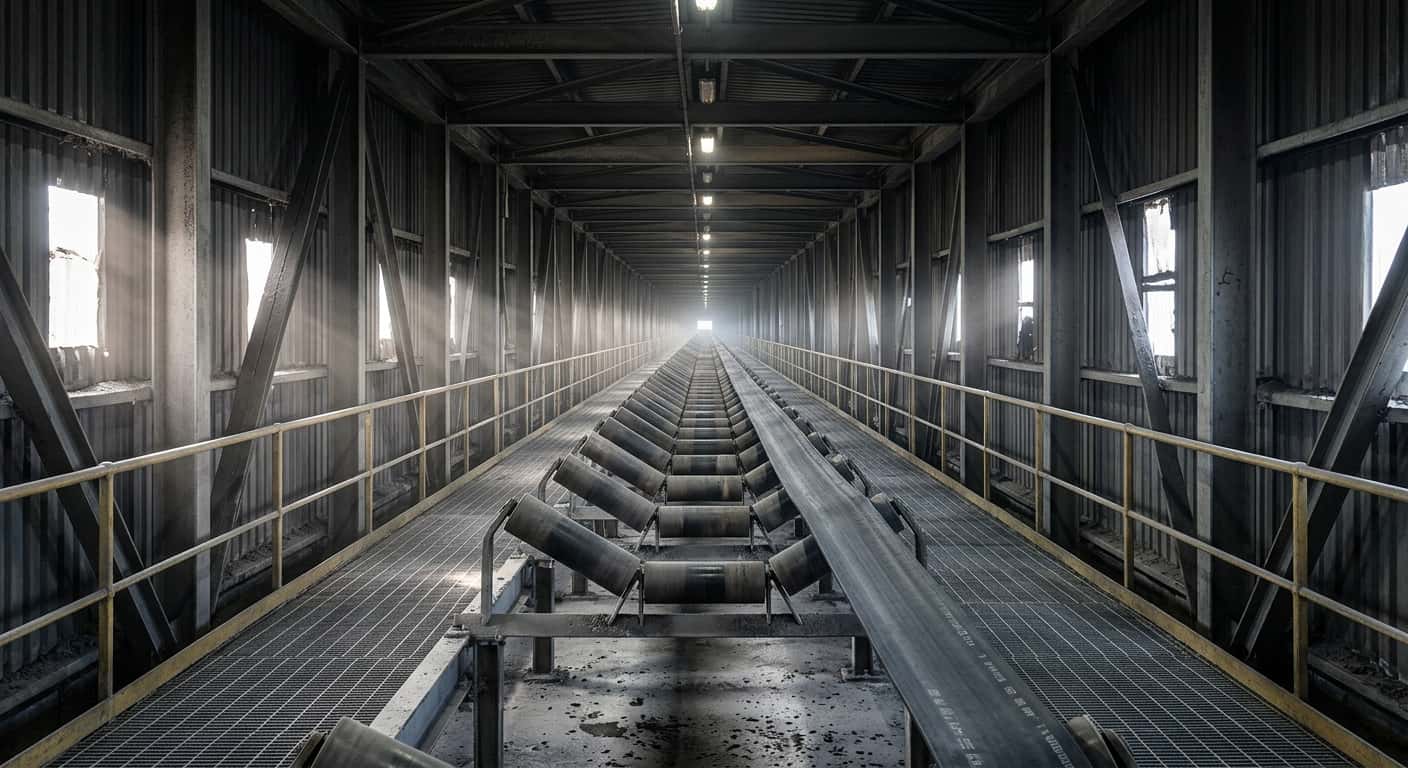
Conveyors
How to select a conveyor belt
Reviewed August 2026
Short answer
Work in this order: define the duty (width, length or conveyor geometry, tph, speed, incline); choose the carcass (fabric EP/NN or steel cord) from the tension and centre distance; choose the cover grade from the dominant wear mechanism and temperature; set the cover thickness from impact and expected life; add any fire-performance requirement from the mine spec; then confirm the splice type and pulley sizes.
A conveyor belt is specified from the duty down. Getting the order of decisions right is what stops a second shutdown.
1. Define the duty
- Belt width, and total length or the conveyor geometry (head/tail centres, pulley diameters, take-up travel)
- Throughput (tph), belt speed and the incline angle
- Drive arrangement and the number and diameter of pulleys
2. Choose the carcass
The working tension (a function of length, lift, tph and drive) sets the carcass. Fabric EP or NN covers most conveyors to around 2000 kN/m; long overland and high-lift systems move to steel cord. See fabric vs steel-cord belting.
3. Choose the cover grade
Identify the dominant wear mechanism on the belt you are replacing — abrasion, cut-and-gouge, heat, oil — and match the grade to it. Underground needs FR or FRAS. See cover grades explained and FR / FRAS and SANS 1173.
4. Set the cover thickness
Thicker top covers buy life under high impact and abrasion but cost flexibility and money. The bottom (pulley) cover is thinner. Match or step down from the belt you removed unless it wore out too fast.
5. Profile
A plain belt handles inclines to about 18°. Steeper needs chevron or cleated belt; very steep to vertical needs sidewall belt.
6. Splice and pulleys
Decide mechanical fastener vs vulcanised joint (steel cord is vulcanised only), and confirm the minimum pulley diameters for the rating and splice. See splicing: fasteners vs vulcanised.
What to send us
As much of the above as you have, plus the material type, bulk density, maximum lump size and temperature. Our engineer confirms the rest.