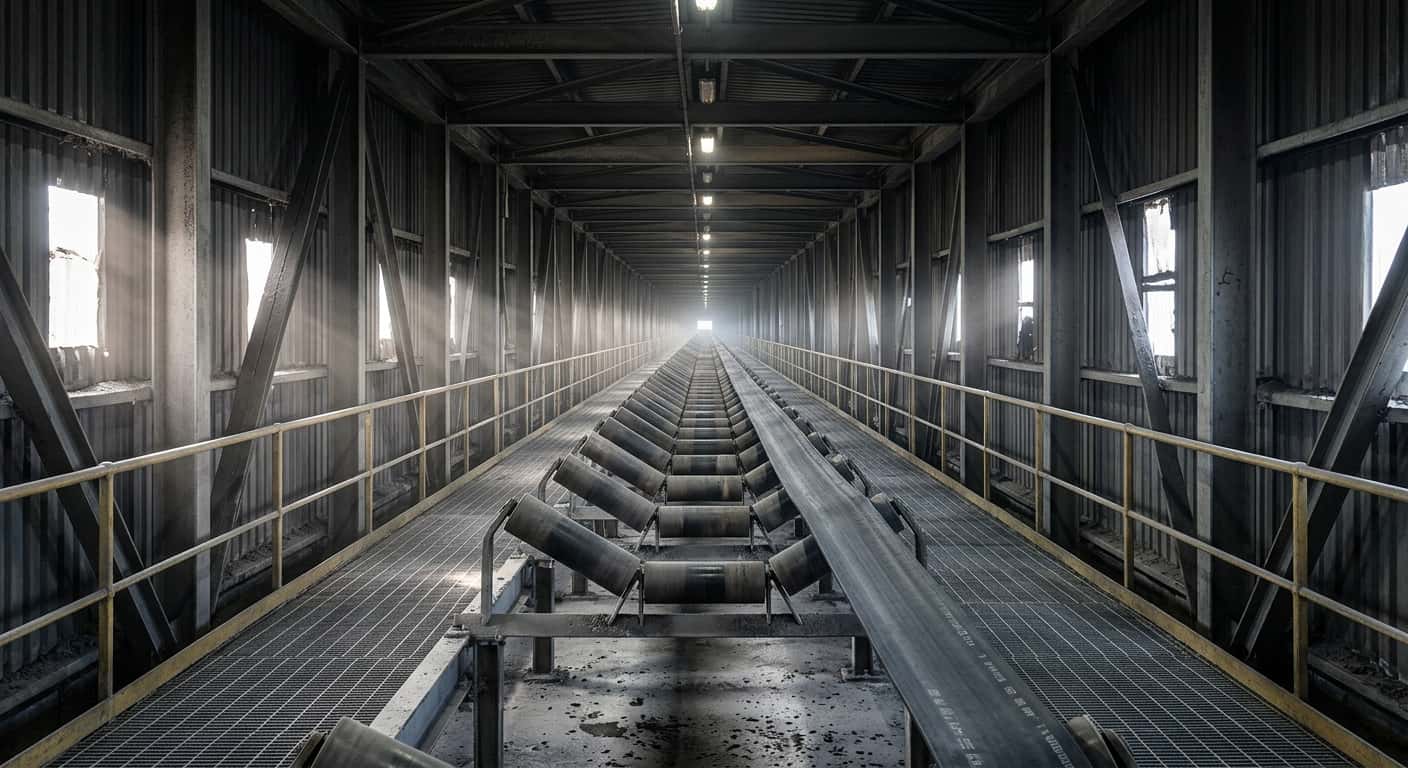
Conveyors
Idler and roller selection basics
Reviewed August 2026
Short answer
You need the roll face (barrel) length, shell (tube) diameter, shaft diameter and shaft-end detail, the bearing housing type, the belt width, speed and material, and the frame arrangement and troughing angle. With those, carry, return and impact rolls — or retrofit rolls for your existing frames — can be matched exactly.
Idler rolls fail predictably — seized bearings, worn shells, shell walk-through on impact sets. Replacing them with the right roll is a five-minute measuring job.
Roll dimensions
- Face length — the working length of the barrel
- Shell / tube diameter — commonly 89, 102, 127, 152 mm
- Shaft diameter and shaft-end style — spring-loaded, flat, hex, threaded
- Overall roll length including the shaft ends
- Bearing size and seal arrangement if known
Frame and duty
- Frame type — inline, offset, garland — and the roll centres
- Troughing angle (20°, 35°, 45°)
- Belt width and speed
- Material, bulk density and lump size
- Location — carry, return, impact (load zone), transition or training
Special cases
- Impact rolls — rubber-ringed or disc; state the drop height and lump size
- Return rolls — plain or rubber-disc for carry-back control
- Guide / training rolls — if belt drift is the real problem, say so; a tracking solution may be a better answer than more rolls
Related questions
Usually yes. Provide the frame's roll centres, the shaft-end style (spring-loaded, flat, hex, threaded), the shaft diameter and the face length, and retrofit rolls can be supplied to drop into the frames you have.